No. 1
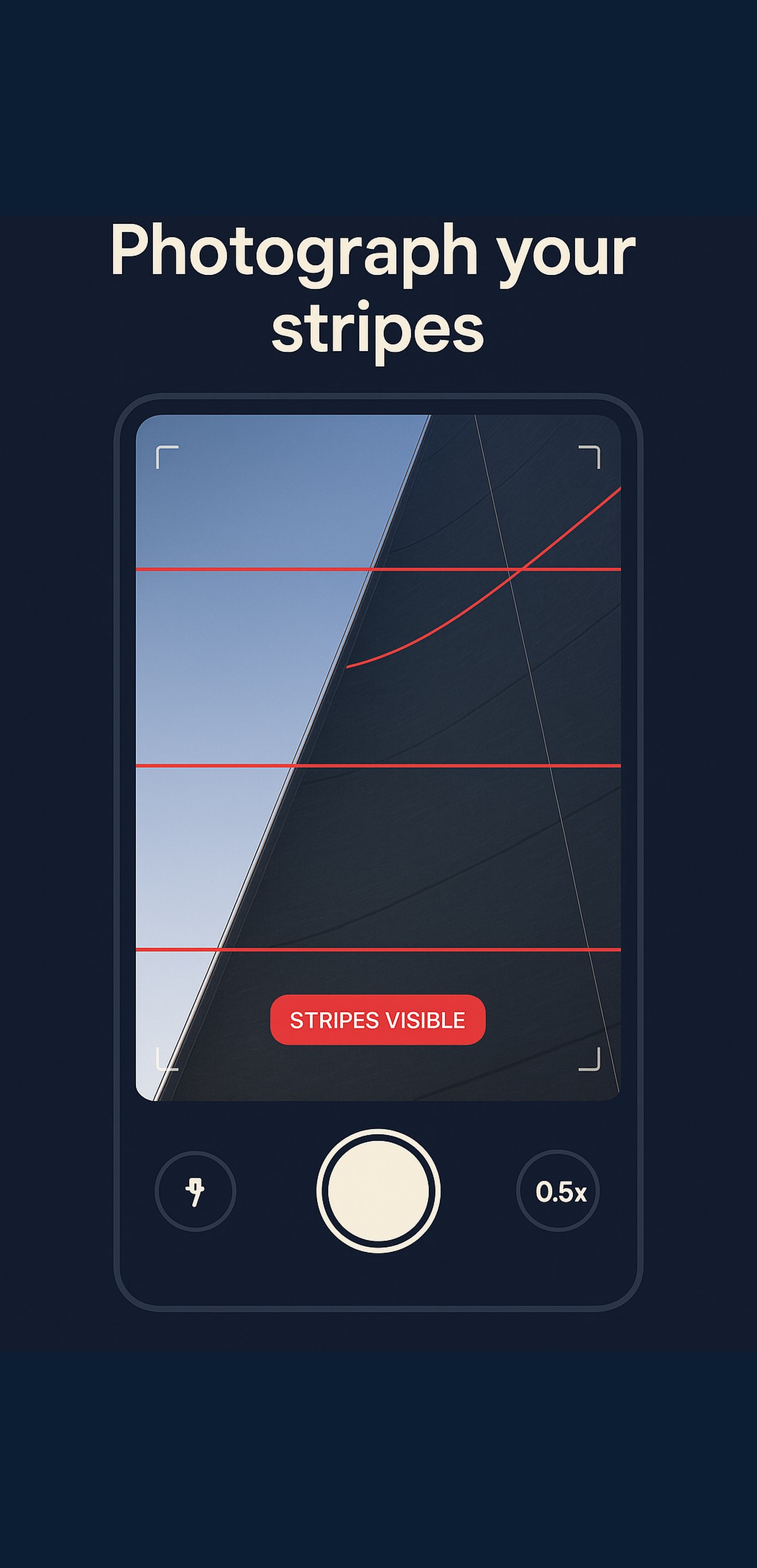
Take a photo
Take a photo with your phone and our computer vision model gets to work.
The instrument — 01
Reads any sail from an optimist to a super maxi — Mainsails and headsails — Port or starboard tack. Use your mobile phone to analyze draft stripes for accurate camber, draft, entry, exit and twist data.
The method — 02
No. 1
Take a photo with your phone and our computer vision model gets to work.
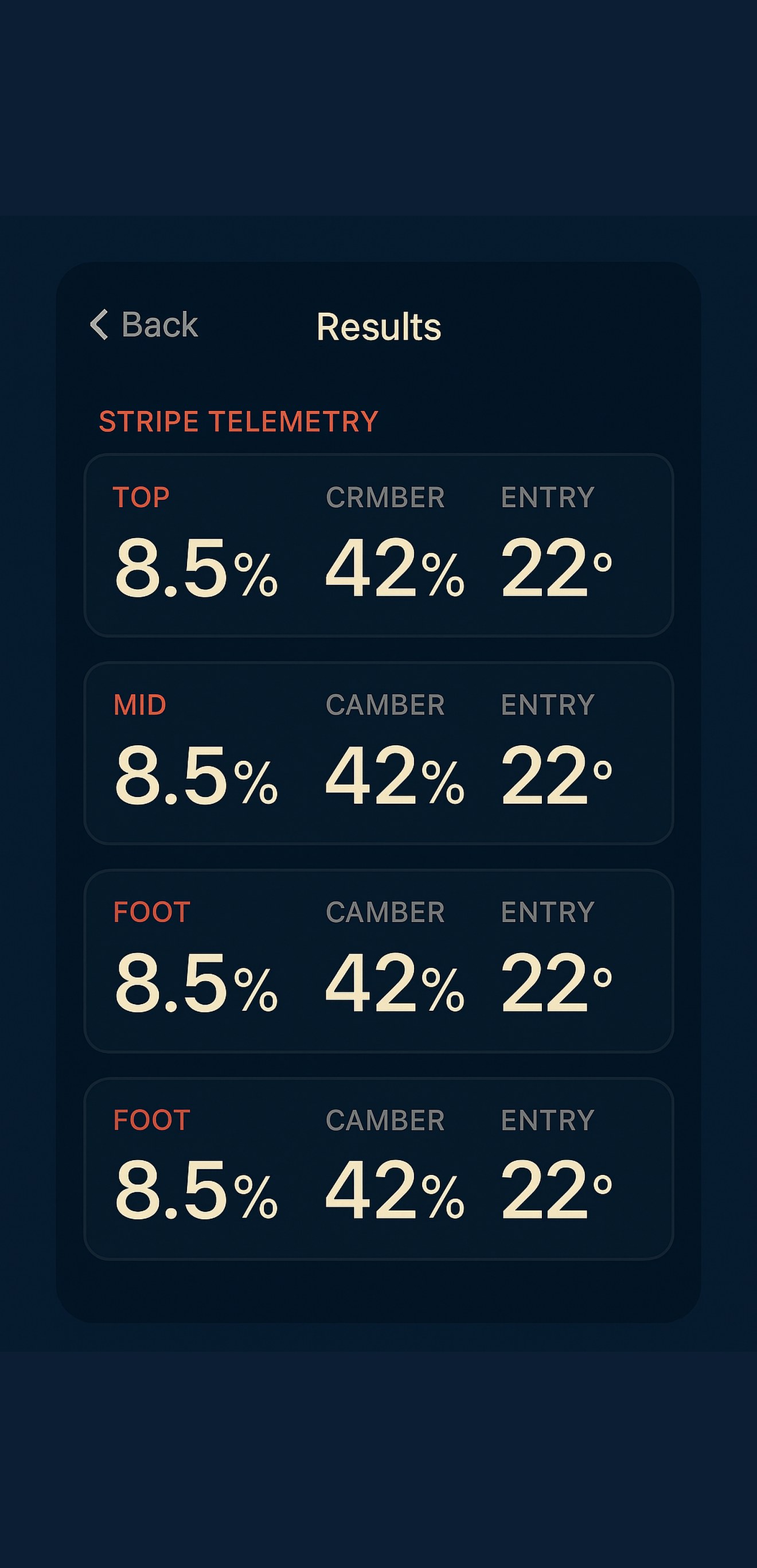
No. 2
SailScan finds each draft stripe and traces the curve from luff to leach to compute sail shape parameters such as Camber (depth), Draft (position of max depth), and Twist (angle relative to the boom).
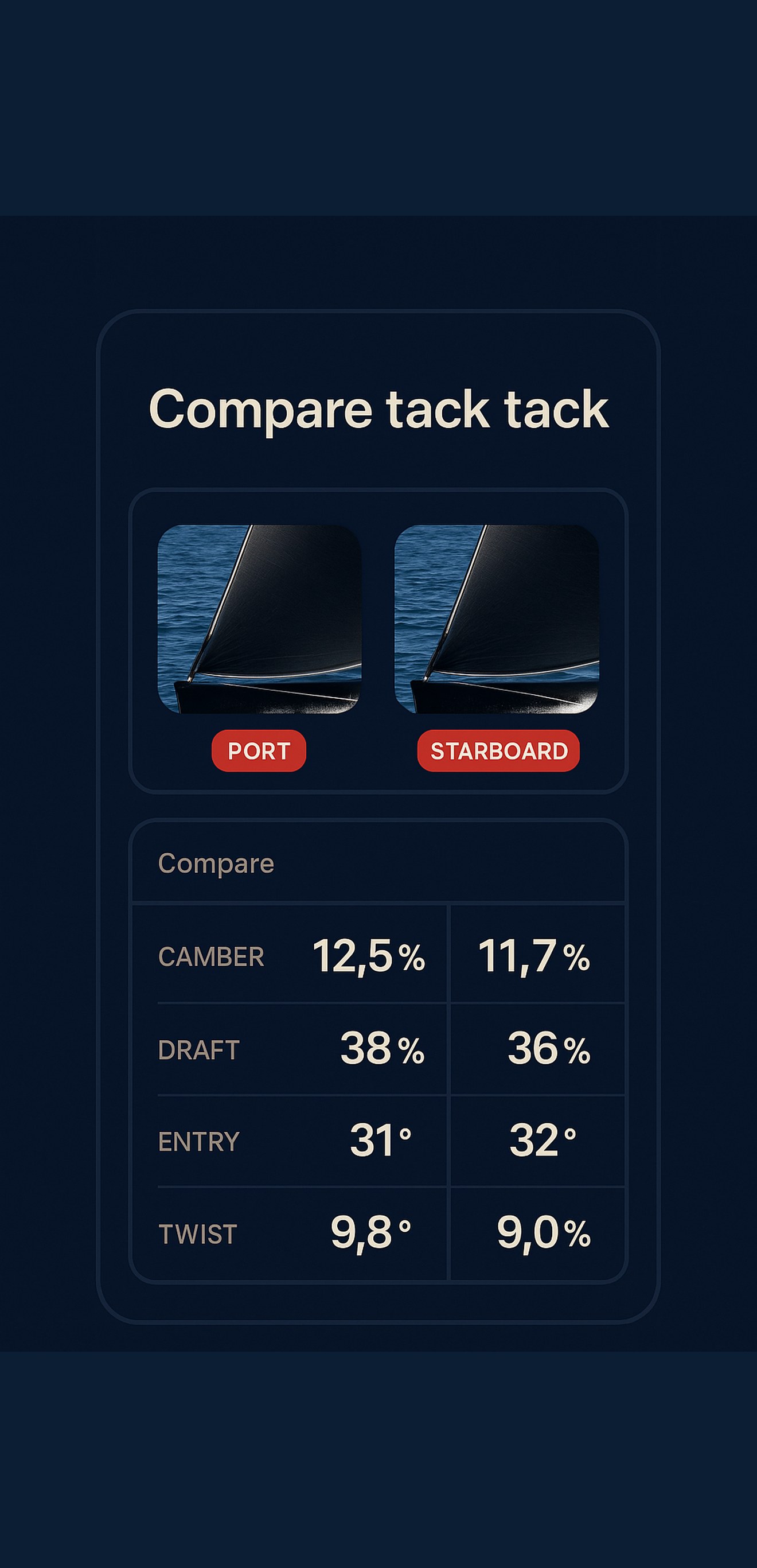
No. 3
Make adjustments in real time. Save scans for later debrief, comparison, or reuse the same settings to increase sail speed and efficiency.
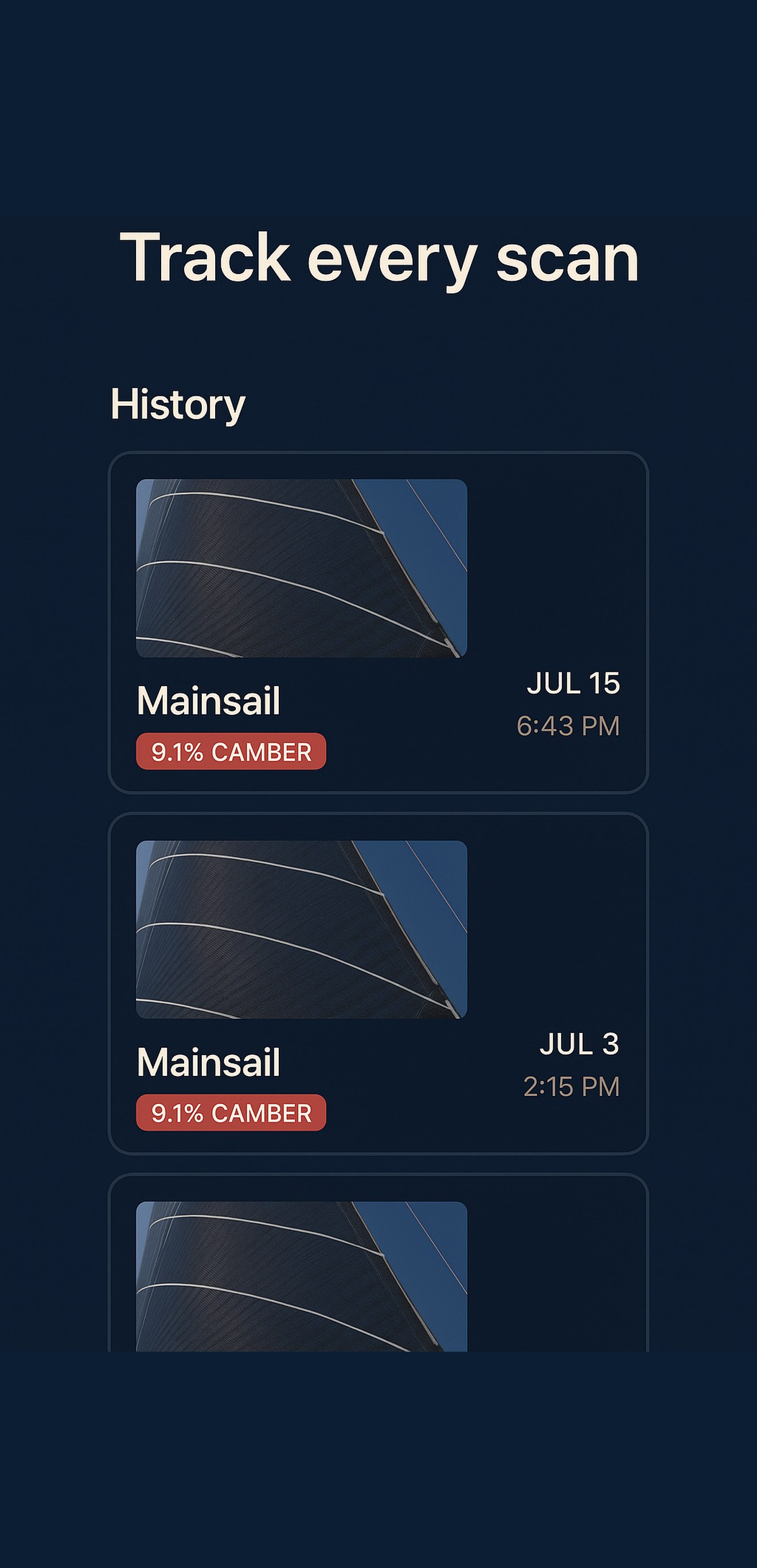
Appendix
Every scan is kept — session by session, sail by sail — ready for the debrief.
Heard on the water — 03
We trimmed the main off SailScan numbers all weekend and found half a knot upwind.Tom R. — J/111 tactician, San Francisco
The draft stripes read in seconds. What used to be an evening of photo markup is done before we hit the dock.Sofia M. — Sailmaker, Newport RI
Camber and twist on every tack, logged. It’s part of our debrief like the GPS track.Henrik L. — Coach, Aarhus DK
I’m a weekend racer, not an engineer. SailScan tells me what to ease and when.Dana K. — Santa Cruz 27, Seattle
The instrument is free to carry.
The platform — 04
The SailScan VLM platform can be customized for your company, team, or coaching needs. Embed a powerful sail scanning and recommendation engine with outputs for sail design, team coaching, and recording into your workflow.
Enterprise enquiriesThe yard — 05
SailScan LLC was founded by veteran racing professional Alex Higby to compute key aerodynamic metrics and make recommendations to optimize sail performance in the field. SailScan is built and maintained in San Francisco, CA by Seamaphore.
— campaigned through the 34th America’s Cup, the 52 Super Series & the Extreme Sailing Series